
 how-to
How to Prepare for Cleaners: A Room-by-Room Checklist
Last Updated: October 24, 2026
Quick Summary
To prepare for cleaners, clear the path rather than the whole house: pick up clutter, floors, and counters, and secure valuables so the team can focus on scrubbing, dusting, and vacuuming. Prep takes 15 to 30 minutes in a typical home, and you do not need to scrub or mop beforehand.
- Tidying is your job and cleaning is the team's job, so handle the tidying yourself.
- Work in priority order: floors, counters, trash, valuables, then used towels.
- Load dirty dishes into the dishwasher or stack them beside the sink.
- Send instructions to the office, not just a note left on the counter.
- A standard house cleaning takes roughly 1.5 to 3 hours for an average home.
Table of Contents
- Tidying vs. Cleaning: What Your Cleaning Team Actually Handles
- Your House Cleaning Checklist Before Cleaners Arrive
- Do Cleaning Services Pick Up Clutter? What to Put Away First
- What to Tell House Cleaners Before the Appointment
- How Long Does a House Cleaning Take? Timing Your Prep
- Pets, Kids, and Working From Home on Cleaning Day
- Conclusion
- Frequently Asked Questions
Tidying vs. Cleaning: What Your Cleaning Team Actually Handles
That split matters because it sets realistic expectations. A cleaning crew arrives with supplies, equipment, and a plan for every room.
Most guides skip this point. Then homeowners feel judged when a cleaner stacks clutter instead of cleaning under it.
Here is the rule we give every new client: clear the path, not the whole house. You are not deep-cleaning before the cleaners come.
- You handle: picking up clutter, personal items, and valuables
- They handle: dusting, vacuuming, mopping floors, scrubbing bathrooms and kitchens
- Both matter: access. A cleaner cannot wipe a counter covered in dishes
If you want to see the exact scope of work, our cleaning checklist breaks down what each room includes.
Your House Cleaning Checklist Before Cleaners Arrive
A house cleaning checklist before cleaners arrive should take 15 to 30 minutes in a typical home, not a full afternoon. The goal is not a spotless house. The goal is a clear path, so the team's paid minutes go toward scrubbing, dusting, and vacuuming instead of moving your belongings from one pile to another.
Start With the Priority Order
If you only have 15 minutes, work in this order. Each step removes an obstacle that would otherwise stop the team from cleaning a surface or floor.
- Floors and walkways. Pick up clothes, toys, shoes, bags, and pet items. A vacuum cannot clean a floor it cannot reach.
- Kitchen and bathroom counters. Move dishes, bottles, makeup, and paper off the surfaces the team will wipe.
- Trash and recycling. Empty bins and bag loose trash so the team is not working around it.
- Valuables and fragile items. Lock away jewelry, cash, medications, and heirlooms, and move breakables out of the cleaning path.
- Used towels and laundry. Gather them into a hamper so the team can replace or wash them without hunting.
That order matches how most cleaning crews move through a home: floors first, then wet areas, then detail work. Prep in the same order and the team rarely has to backtrack.
Kitchen and Bathrooms
These two rooms eat the most cleaning time, so prep pays off fastest here.
- Load dirty dishes into the dishwasher or stack them beside the sink
- Wipe down food and crumbs from counters
- Take out the trash and recycling
- Clear personal items off bathroom counters
- Hang used towels on hooks or drop them in a hamper
- Move floor mats and bath rugs aside if they need to be washed separately
Small moves, big payoff. A clear counter means the team spends its minutes cleaning, not rearranging.
Bedrooms and Living Areas
Bedrooms and living areas mostly need clutter control.
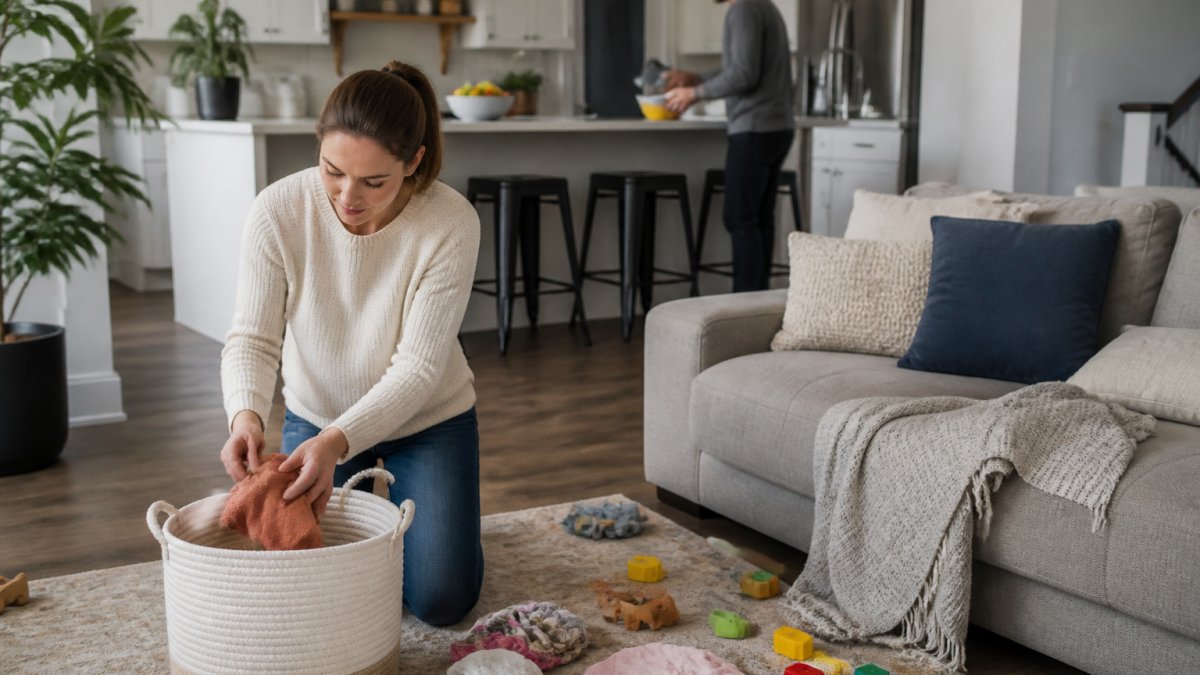
- Pick up clothes from the floor and put them in a hamper
- Gather toys into bins
- Clear nightstands and coffee tables of cups, papers, and remotes
- Move shoes and bags to a closet
- Straighten bedding only if the service includes bed changes; otherwise leave it
One insider tip: walk each room and ask, "Can a vacuum reach the floor?" If not, move the item.
What You Do Not Need to Do
You do not need to scrub, mop, or disinfect before the team arrives. That is the cleaner's job, and doing it twice wastes your time. You also do not need to empty every closet or drawer unless the service is a deep clean or move-out clean that includes interiors. A common pattern is that first-time clients over-prep and then feel frustrated when the scope does not match their effort. Check the service description before you start.
Do Cleaning Services Pick Up Clutter? What to Put Away First
No, most cleaning services do not pick up clutter, and that is by design. Teams clean surfaces and floors, but sorting personal belongings is not part of the job. It is also a liability issue: no one wants a cleaner guessing which papers are trash.
So what goes first? Prioritize in this order:
- Valuables and fragile items. Jewelry, cash, medications, heirlooms. Lock them away or move them to a safe spot.
- Floors and surfaces. Toys, clothes, dishes, mail, and food.
- Personal care items. Toothbrushes, razors, and makeup in bathrooms.
- Pet items. Food bowls, beds, and litter boxes that block access.
If your home needs more than a routine tidy, a deep cleaning service covers behind appliances, inside cabinets, and grout. That is a different job from a standard visit, and it is worth knowing which one you booked.
What to Tell House Cleaners Before the Appointment
What to tell house cleaners matters more than most people expect. Clear instructions save time and prevent disappointment. A team that knows your priorities cleans the right things first, and a team that knows your constraints avoids damage and wasted effort.
Send a short message before the visit covering:
- Priority areas. "The master bathroom and kitchen need extra attention."
- Special requests. Pet hair, allergies, or products to avoid.
- Access arrangements. A spare key, door code, or a person who will be home.
- Pets and children. Where they will be and whether the team should expect them.
- Fragile items. Anything the crew should not move.
- Areas to avoid. A home office, a nursery, a room under repair, or a closet the team should skip.
- Special surfaces. Marble, hardwood, brass, and natural stone need different products; say so up front.
- Supplies. Confirm whether the team brings products and equipment or uses yours, and whether you have a preferred brand for allergies or sensitivities.
Keep it brief. A few bullet points beat a long email. If you are ready to book or have questions, you can get a free cleaning quote and share your details in one step.
How Prep Changes by Service Type
The same home needs different prep depending on what you booked. A common pattern is that clients prepare for a standard clean when they booked a deep clean, or the reverse, and then judge the result against the wrong scope.
- Recurring standard clean. Light pickup, clear counters, and secure valuables. The team maintains what is already mostly clear.
- First-time or deep clean. Full declutter, secure valuables, and clear access to baseboards, behind furniture, and inside cabinets if the scope includes interiors. Expect the team to need more room to work.
- Move-in or move-out clean. Empty the unit of belongings, remove trash, and confirm whether appliances and closets are included. An empty home is the easiest to clean and the easiest to prep.
- Post-renovation clean. Clear debris and construction dust from walkways, protect access paths, and tell the team about any wet finishes, fresh paint, or areas that should not be touched.
If you are unsure which service you booked, ask before the appointment. It is easier to adjust the prep than to re-clean a room after the visit.
How Long Does a House Cleaning Take? Timing Your Prep
A standard house cleaning takes roughly 1.5 to 3 hours for an average home, depending on size, condition, and how many cleaners arrive. Deep cleans and move-out cleans run longer.
That estimate shapes your prep. If your team arrives at 9 a.m., finish your pickup the night before. Morning-of scrambling usually means half-finished tasks and a stressed start.
Match your prep time to the service:
| Service Type | Typical Duration | How Much Prep You Need |
|---|---|---|
| Recurring standard clean | 1.5-2.5 hours | Light pickup, clear counters |
| First-time or deep clean | 3-5 hours | Full declutter, secure valuables |
| Move-out clean | 3-5 hours | Empty unit, remove all belongings |
| Post-renovation clean | 4-6 hours | Clear debris, protect access paths |
Recurring plans stay faster when you prep consistently. Our recurring house cleaning plans show how weekly, biweekly, and monthly visits differ in scope so you can plan around the appointment.
Pets, Kids, and Working From Home on Cleaning Day
Pets, kids, and remote work change the plan. The goal is simple: keep everyone safe and let the team move without tripping over anyone.
For pets:
- Secure anxious or reactive animals in a closed room or outside
- Clear food bowls, beds, and litter boxes from the cleaning path
- Mention shed-heavy pets so the team brings the right tools
For kids:
- Send them to a park, a relative's house, or one closed room during the visit
- Pick up small toys that could jam a vacuum
- Move homework and craft supplies off tables
For remote workers:
- Claim one room as your office and tell the team to skip it
- Take calls in that room while the crew works elsewhere
- Expect some noise. Vacuuming and mopping are not quiet tasks
Conclusion
Preparing for a cleaning visit does not require a spotless house. It requires a clear path, secured valuables, and a short list of priorities. Get those three right and the team spends its time on the work you actually hired them for.
Madtown Maids makes that easy. Our trained, background-checked teams follow detailed checklists, our pricing is transparent with no long-term contracts, and we offer flexible scheduling that fits real homes with kids and pets. Get a quote from Madtown Maids and walk into a clean home without the guesswork.
Frequently Asked Questions
Should I clean before the cleaners come?
No, you do not need to clean. Your job is to tidy, not scrub. Put away personal belongings, clear countertops and floors, and gather trash so the team can reach every surface. The cleaning crew handles dusting, mopping, vacuuming, and sanitizing. A quick 15 to 20 minute pickup before they arrive is enough, and it lets the team spend their time on actual cleaning instead of moving your things.
Do cleaning services pick up clutter?
Most services will move small items to clean underneath, but they are not there to organize your home. Heavy clutter slows the crew down and can leave spots missed. Before the visit, put away clothes, toys, dishes, and paperwork. If a room needs serious decluttering, ask about it when you book so the team can plan extra time or recommend a different service.
Do I need to be home when the cleaners arrive?
You do not have to be home. Many clients share a spare key, door code, or garage code and go about their day. If you will be out, confirm the access arrangement in writing before the appointment and let the team know about pets, alarm codes, and anything fragile. Being present for the first visit can help you walk through priorities, but it is not required for ongoing service.
How long does a house cleaning take?
A standard clean for a two-bedroom home usually takes about two to three hours with a two-person crew, while larger homes or deep cleans can run four hours or more. Clutter, pet hair, and the number of bathrooms all add time. Clearing surfaces and floors before the crew arrives is the easiest way to keep the visit on schedule and within the quoted time.
