 how-to
How to Clean an Apartment for Your Security Deposit
Last Updated: November 4, 2026
Quick Summary
To clean apartment for deposit success, focus on the areas landlords check most: the kitchen (especially grease on the oven and range hood), bathrooms, floors, walls, and appliances. Work room by room from top to bottom, and photograph every room after cleaning.
- Landlords can't charge for normal wear and tear, but grease and pet stains are chargeable.
- Clean inside the oven, including the racks and door glass, and wipe the range hood filter.
- Remove mildew from bathroom caulk and corners, since it is a common chargeable item.
- Dust ceiling fans, blinds, and baseboards, because inspectors check these high and easy-to-miss areas.
- Take timestamped photos of every room and request a written move-out inspection.
Table of Contents
- What Landlords Check During a Move-Out Inspection
- Normal Wear and Tear Versus Chargeable Cleaning
- Move-Out Cleaning Checklist, Room by Room
- What Is Included in a Move-Out Cleaning Service
- How Long It Takes to Clean an Apartment Before Moving Out
- Documenting the Condition Before You Hand Back Keys
- Printable Move-Out Cleaning Checklist PDF and Next Steps With Madtown Maids
- Frequently Asked Questions
What Landlords Check During a Move-Out Inspection
Most renters lose part of their security deposit for one simple reason: the apartment was not clean enough when they handed back the keys.
Knowing what the inspector looks at is the first step to clean apartment for deposit success. For a deeper, same-topic guide, read how to pass a move-out inspection and protect your deposit.
Here is what most inspectors look for:
- Grease and grime on the stove, range hood, and cabinet fronts
- Mildew, soap scum, and hard water stains in bathrooms
- Dirty floors, including edges, corners, and under the fridge
- Scuffs, marks, and holes in walls and doors
- Dust on baseboards, blinds, and ceiling fans
- Inside appliances, especially the oven and refrigerator
Many renters assume the inspector will be lenient. They often are not. A clear, detailed walkthrough is the best way to protect your money.
Normal Wear and Tear Versus Chargeable Cleaning
Landlords generally cannot charge you for normal wear and tear. This is the gradual aging that happens when someone lives in a home for a long time. Dirt, grease, and stains that you created are a different matter.
Normal wear and tear includes:
- Light scuffs on hardwood or laminate floors
- Faded paint from sunlight
- Worn carpet in high-traffic paths
- Small wall marks from hanging pictures
Chargeable cleaning or damage includes:
- Pet urine stains or odors in carpet
- Grease buildup on the oven or range hood
- Large holes in walls
- Broken blinds or cabinet doors
Rules for deposit deductions vary by state and by lease terms. Check your lease and your state's landlord-tenant rules before you assume a charge is fair. Your state's official tenant resources, such as the Wisconsin Department of Agriculture, Trade and Consumer Protection tenant guidance, can help you understand what is allowed.
Move-Out Cleaning Checklist, Room by Room
A room-by-room plan keeps you from missing anything, and it lets you work in the order that saves the most time. You can compare your own list against our detailed room-by-room cleaning checklist to see exactly what a professional cleaning covers. Work from the top of each room to the bottom so dust and crumbs fall onto surfaces you have not cleaned yet, and clean the dirtiest rooms first while you still have energy.
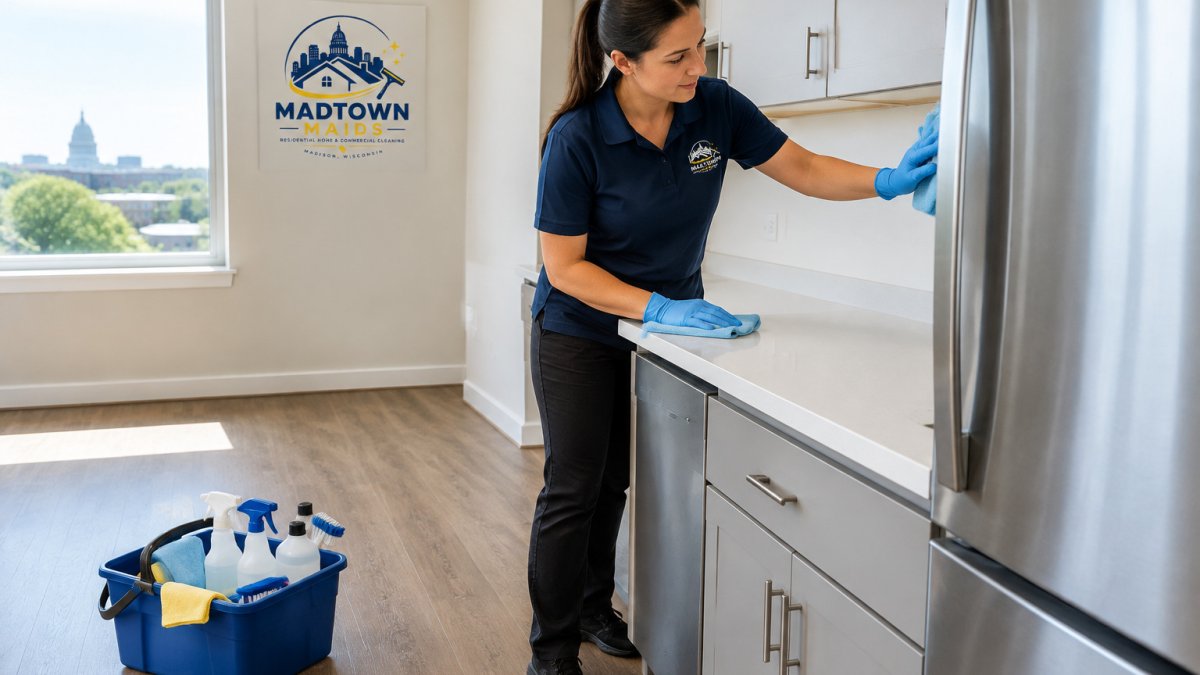
Start with a simple routine for every room:
- Dust ceilings, light fixtures, and ceiling fans
- Wipe walls, doors, and door frames
- Clean windows, sills, and blinds
- Wipe baseboards and outlet covers
- Vacuum, then mop floors last
A tidy apartment is the goal, but you also want a lived-in apartment that is ready for the next tenant. [IMAGE PLACEHOLDER]
Kitchen and Appliances
The kitchen gets the closest look from most inspectors because grease and food residue are the most common reasons for a cleaning deduction. Focus on grease and crumbs, especially where they hide.
- Clean inside the oven, including the racks and the door glass. Remove the racks and soak them in hot water with dish soap; scrub the oven cavity with a non-abrasive cleaner and wipe the door glass inside and out.
- Wipe the range hood filter and the top of the stove. Check the label on your hood filter before soaking it.
- Empty and wipe the refrigerator, including door seals, shelves, and the freezer. Pull the fridge out if it is on wheels and clean the floor and wall behind it.
- Clean the microwave inside and out, including the turntable and the vent grille.
- Wipe cabinet fronts, handles, and the backsplash. Grease often collects on the underside of upper cabinets and on the seam where the counter meets the backsplash.
- Clean the sink, faucet base, and drain stopper. Remove the stopper and clear hair and debris from the drain.
- Wipe the dishwasher door gasket and run an empty hot cycle if the unit smells.
Watch out: Oven cleaners can damage some surfaces, and mixing bleach with ammonia-based cleaners produces toxic gas (the CDC). Read labels, ventilate the room, and test any strong cleaner on a small spot first.
Check under the fridge and behind the stove for crumbs and dust buildup, and wipe the tops of the refrigerator and cabinets where grease film collects.
Bathrooms, Floors, and Walls
Bathrooms are where landlords often find the most problems. Hard water and soap scum can stain fixtures quickly, and mildew in caulk is one of the most common chargeable items.
- Scrub the toilet, base, and behind the seat, including the hinges and the floor around the base.
- Clean the shower, tub, and tile grout. A mix of baking soda and water works on tile; use a grout brush rather than a sponge to reach into the lines.
- Remove mildew from caulk and corners. If caulk is stained black and will not come clean, note it in your move-out photos rather than trying to recaulk without permission.
- Polish mirrors and chrome fixtures, and wipe the exhaust fan cover.
- Wipe the vanity, cabinets, and the inside of drawers and shelves.
For floors, vacuum carpets and sweep or mop hard surfaces. Pay attention to edges and corners, and move the refrigerator and stove if you can to clean underneath. For walls, remove fingerprints and scuffs with a damp cloth or a mild eraser sponge.
Living Areas and Bedrooms
Living rooms and bedrooms are usually the easiest rooms, but they are where forgotten items and dust on high surfaces cause problems.
- Dust ceiling fans, light fixtures, and the tops of door frames.
- Wipe blinds slat by slat, and clean window tracks with a vacuum crevice tool and a damp cloth.
- Vacuum carpets, including under the bed and along the walls, and spot-treat any stains you created.
- Wipe baseboards, outlet covers, and switch plates.
- Remove all personal belongings, furniture, and trash. Check closets, drawers, the balcony, and storage areas.
A common pattern is that renters clean the visible surfaces but leave dust on ceiling fans, blinds, and baseboards, which inspectors note because those areas are easy to check.
The table below summarises the most common areas landlords check, the cleaning task for each, and the usual reason it leads to a deduction.
| Area | Task | Why it matters |
|---|---|---|
| Oven | Remove racks, soak, scrub cavity, wipe door glass | Grease is a common deduction |
| Range hood | Wipe filter and top of stove | Grease buildup |
| Refrigerator | Empty, wipe seals and shelves, clean behind | Often overlooked |
| Bathroom caulk | Remove mildew from caulk and corners | Common chargeable item |
| Hard water | Polish mirrors and chrome fixtures | Stains show quickly |
| Ceiling fans | Dust fan and light fixtures | Inspectors check high areas |
| Blinds | Wipe slat by slat | Easy to miss |
| Baseboards | Wipe baseboards and outlet covers | Dust collects here |
What Is Included in a Move-Out Cleaning Service
A move-out cleaning service is a professional clean designed to match what landlords inspect. It usually covers the kitchen, bathrooms, floors, walls, and appliances, both inside and out.
Typical tasks include inside appliances, baseboards, cabinets, and dusting high areas. Prioritizing these specific areas ensures that every corner meets the standard of a comprehensive move-out cleaning checklist before the final inspection.
Pricing depends on unit size, condition, and the services you choose. Visit the Madtown Maids website for current pricing or a quote that fits your situation.
How Long It Takes to Clean an Apartment Before Moving Out
The time needed depends on the size and condition of your apartment. A small studio that is in fair shape may take a single afternoon. A larger apartment with neglected appliances can take several days of work. Kitchens and bathrooms often take up much of the total cleaning time, so plan those first.
A prioritized schedule helps you use the final days well. A common sequence for move-out cleaning is:
Before your belongings are out:
- Clean the oven, refrigerator, and other appliances while you still have space to work and before the kitchen is cluttered with boxes.
- Wash walls, baseboards, and cabinet fronts in empty rooms.
- Clean blinds and window tracks before furniture is moved against the windows.
After your belongings are out:
- Vacuum and mop floors once furniture is gone, so you can reach under the bed, behind the sofa, and along the walls.
- Do a final dusting of ceiling fans, light fixtures, and high shelves, since moving boxes stirs up dust.
- Wipe down closets, drawers, and storage areas that were hidden by your things.
Plan your time with a simple schedule:
- Kitchen and appliances: often the longest part of the job
- Bathrooms: allow extra time for a thorough scrub
- Floors and walls: allow a full day, including drying time
- Final walkthrough: a short pass to catch what you missed
If your schedule is tight, you can hire a professional team instead. Book a move-out cleaning in Madison if you want the work done before your lease ends.
Documenting the Condition Before You Hand Back Keys
Photos are your best protection. Take clear pictures of every room after cleaning, including appliances, floors, and bathrooms. Use timestamps and save the files in a folder.
Also ask for a move-out inspection in writing. Many landlords will do a walkthrough with you present. If they find a problem, you have evidence to respond with. Our team recommends keeping copies of all receipts for cleaning supplies and services, too.
Printable Move-Out Cleaning Checklist PDF and Next Steps With Madtown Maids
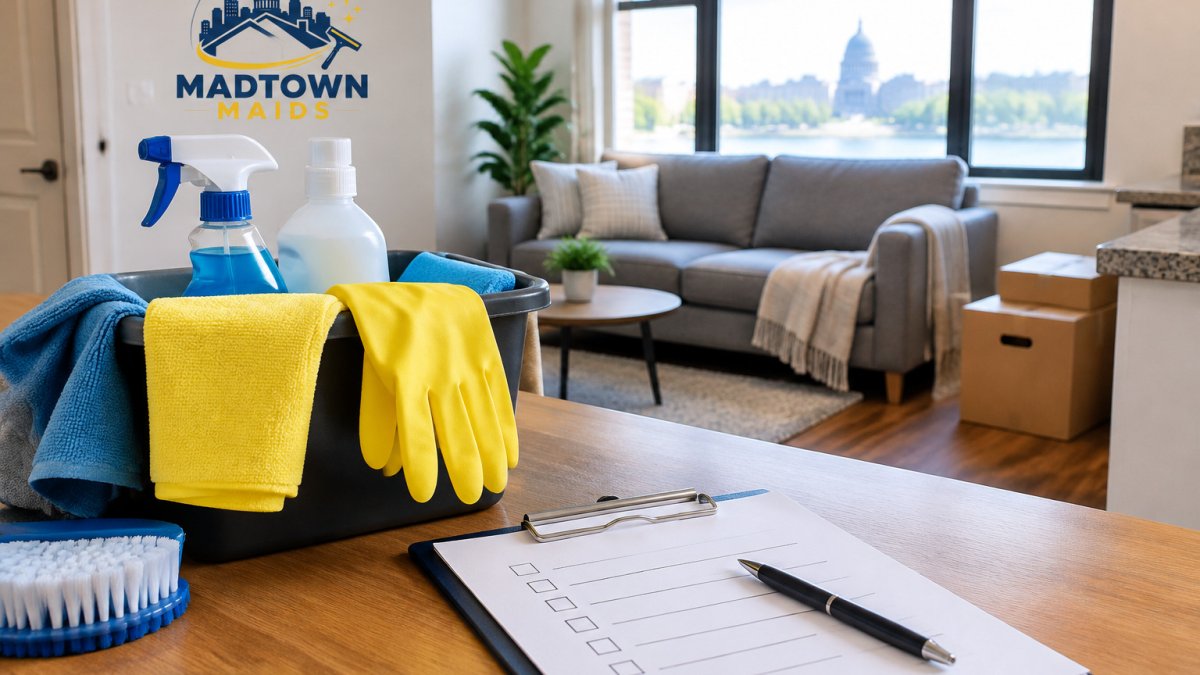
Use this checklist as a final review before you return your keys:
- Kitchen appliances cleaned inside and out
- Bathrooms scrubbed, including grout and fixtures
- Floors vacuumed, swept, and mopped
- Walls wiped and small holes patched
- Trash and personal belongings removed
- Photos taken of every room
If you would rather skip the work, get a free cleaning quote from Madtown Maids in Madison, WI. We serve all of Dane County and can help you prepare for a landlord-ready move-out.
Frequently Asked Questions
How clean is your apartment supposed to be when you move out?
Most leases require the unit to be returned in the same condition it was in at move-in, minus normal wear and tear. In practice, that means a clean, empty apartment with no grease buildup in the kitchen, no soap scum in the bathroom, floors swept or vacuumed, and no trash or belongings left behind. Check your lease and any move-in inspection report, since those documents define the baseline your landlord will compare against. When in doubt, aim for the standard a new tenant would expect to move into.
What does broom clean mean when moving out?
Broom clean is a common lease phrase meaning the unit should be swept free of loose dirt, dust, and debris, with trash removed and personal items cleared out. It does not require scrubbing counters, cleaning appliances, or washing floors. However, many landlords expect more than broom clean in practice, especially in kitchens and bathrooms. If your lease says broom clean, get that requirement in writing from the landlord before you start, so you know exactly what is expected.
Can cleaning be taken out of a security deposit?
Yes. Under many state laws, a landlord may deduct reasonable cleaning costs from a deposit if the unit is left dirtier than normal wear and tear would explain. Deductions must typically be itemized and tied to actual costs. Landlords typically must return deposits or provide an itemized list of deductions within a set period after the tenancy ends, as set by state law. Keep receipts and move-out photos so you can dispute any charge that does not match the condition of the unit.
What should you clean first before a move-out inspection?
Start with the tasks that create the most visible problems and that other cleaning can make worse, such as the oven, refrigerator, and bathroom grout. Clean those before floors, since dust and grease fall onto surfaces you have already done. Next, dust high areas and walls, then clean floors last so they are not re-dirtied during the process. Finish with a final sweep of entryways and closets, then take photos of every room before you leave.